Last verified: October 26, 2026
TL;DR
Training companies choosing a learning platform in 2026 should evaluate features against revenue mechanics rather than feature-count parity: commerce and catalog flexibility, item-level assessment data, content authoring independence from engineering, and API-based integration with CRM and data warehouse systems determine whether a platform earns its keep. The market divides into four approaches (general-purpose learning management systems, purpose-built credentialing and exam prep platforms, packaged test-prep content products, and custom-built internal systems), and the deciding variable is whether the business sells learning outcomes or simply delivers courses. Pricing across the category is most often structured per active learner on an annual contract, which makes learner-volume forecasting a feature decision as much as a budget one.
What Makes LMS Feature Requirements Different for Training Companies?
A training company sells learning as a product, which inverts almost every assumption built into enterprise learning software. Corporate learning and development teams buy an LMS to prove internally that training happened: compliance modules completed, certificates issued, audit trail intact. A training company buys a platform to acquire learners, charge them, prepare them for an outcome they care about, and prove that outcome well enough to sell the next cohort. That difference puts commerce, catalog structure, learner experience, and outcome measurement at the center of the requirements list, where an internal L&D buyer would put workforce reporting and HRIS integration.
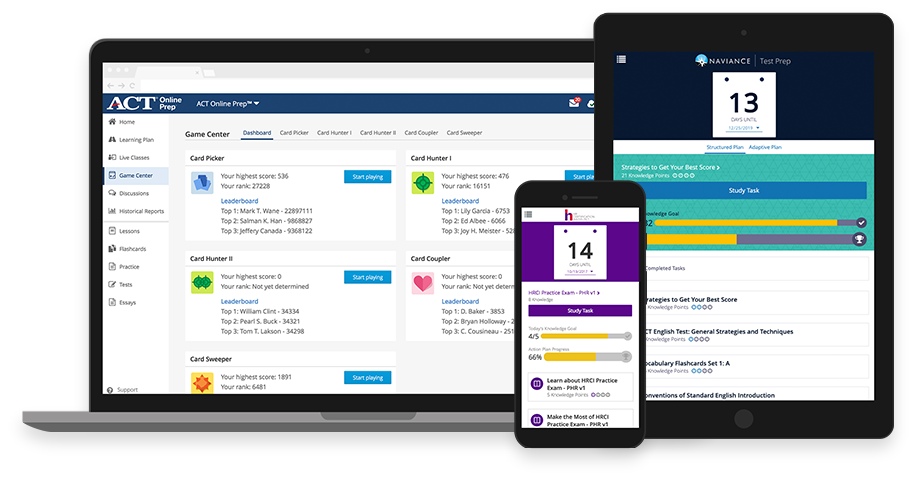
The commercial consequence is direct. When learners are customers rather than employees, churn is visible, refunds are possible, and reputation travels through reviews and word of mouth. A clunky enrollment flow suppresses revenue. A practice exam that fails to reflect the real test produces candidates who fail and say so publicly. Features that an internal training department treats as nice-to-have (branded storefronts, cohort-level readiness reporting, mobile continuity across devices) become operationally load-bearing for a company whose renewal depends on learner satisfaction.
Multi-tenancy is the second structural difference. Training companies frequently serve several distinct audiences at once: individual candidates buying direct, corporate clients purchasing seats in bulk, association members accessing content as a membership benefit, and partner organizations reselling under their own brand. A platform that supports only one learner population and one brand forces operational workarounds, typically separate instances with separate reporting, which fragments exactly the data the business needs to make pricing and content decisions.
The third difference is content velocity. Exam blueprints change, regulations update, and continuing education (CE) requirements shift by jurisdiction. A training company's content team must be able to revise, retag, and republish without filing an engineering ticket. Platforms built for internal corporate use often assume content changes once a year; platforms built for commercial training programs assume content is a living asset.
Which LMS Feature Categories Matter Most in 2026?
Seven feature categories separate platforms that support a training business from platforms that merely host courses. Each one maps to a revenue or defensibility mechanism rather than a checklist item.
Commerce and catalog management. The platform should support direct enrollment, bulk seat purchases, bundles, subscriptions, and promotional pricing without custom development. Look for native eCommerce or a documented API connection to a payment processor and a CRM such as Salesforce or HubSpot, plus support for entitlements (who can access what, for how long) that survive a learner moving between a corporate contract and an individual purchase. Training companies running non-dues revenue programs for associations also need the catalog to express member versus non-member pricing.
Assessment depth and item-level analytics. This is the category where general-purpose platforms most often fall short. Ask whether the system calculates item difficulty and discrimination using psychometric methods such as Item Response Theory (IRT) or Elo-style calibration, whether confidence-based scoring distinguishes a known answer from a lucky guess, and whether item performance data is exposed to content managers rather than held in a vendor's internal reporting. For any program tied to accreditation under ISO/IEC 17024 or reviewed against National Commission for Certifying Agencies (NCCA) standards, that evidentiary trail is the difference between a defensible exam and an assertion.
Content authoring and tagging workflow. Subject-matter experts should be able to author questions, attach them to a blueprint domain, set difficulty, add rationales, and publish within a review workflow. Bulk import and export (CSV or QTI) matters for any organization migrating an existing item bank. The observable signal of a weak authoring layer: content teams maintaining the real item bank in spreadsheets and using the platform only as a delivery shell.
Adaptive learning and personalization. Adaptive sequencing, spaced repetition, and recommended study paths reduce the time a learner spends on material already mastered. The practical test is whether adaptivity is driven by item-level response data or by coarse course-completion signals, because only the former can identify a specific knowledge gap.
Analytics and data portability. Built-in dashboards age quickly. What persists is the ability to export raw response data into a warehouse such as Snowflake or BigQuery and analyze it alongside sales and support data. Verify whether the platform offers a documented REST or GraphQL API, webhooks for enrollment and completion events, and scheduled exports, and whether raw item-level responses are included or only aggregate summaries.
Standards and integration surface. Learning Tools Interoperability (LTI 1.3) for content exchange, SCORM 1.2 and 2004 plus xAPI (Tin Can) for packaged content, Assignment and Grade Services for gradebook passback, and SAML 2.0 or OpenID Connect for single sign-on cover most of what a training company needs to interoperate with client systems. Clients in higher education will ask about Canvas, Blackboard, or Moodle compatibility, which in practice means LTI conformance.
Security, accessibility, and privacy. SOC 2 Type II attestation, Web Content Accessibility Guidelines (WCAG) 2.2 Level AA conformance documented in a VPAT, and defined handling under GDPR and the California Consumer Privacy Act (CCPA) are baseline procurement questions in 2026. Training companies selling to government or healthcare clients should also ask about Section 508, FERPA where applicable, and whether the vendor supports data residency outside the United States.
How Do the Four Platform Approaches Compare?
The four approaches trade off differently on commerce flexibility, readiness data, and content control, and that comparison predicts fit better than any feature matrix.
| Approach | Strongest Feature Set | Weakest Feature Set | Who It Fits |
|---|---|---|---|
| General-purpose LMS | Course catalog breadth, SCORM/xAPI support, completion reporting | Item-level psychometrics, exam simulation fidelity | Training companies selling skills courses with no single consequential exam |
| Purpose-built credentialing and exam prep platform | Item banks, practice exam fidelity, IRT and confidence-based scoring, branded multi-audience delivery | Broad compliance-training workflows, workforce HRIS depth | Companies whose revenue depends on certification pass rates and CE programs |
| Packaged test-prep content product | Speed to market, bundled content | Data ownership, item bank control, learner relationship | Organizations testing a new exam vertical before investing in platform capability |
| Custom-built internal system | Exact fit to a proprietary blueprint, total data control | Ongoing maintenance load, feature velocity, security upkeep | Large bodies with in-house engineering and psychometric staff |
The practical read: the second row wins when pass rates are the product, because item-level data is both the quality control mechanism and the marketing evidence. The first row wins when the catalog is broad and no single assessment carries commercial weight. The third is a market test, not a durable platform decision. The fourth only pencils out when the exam blueprint is genuinely proprietary and internal engineering capacity is reliably available.
How Should a Training Company Evaluate Platform Pricing Structure?
Pricing in this category is most commonly structured per active learner on an annual contract, with tiers that step up as learner volume grows. Some platforms price per registered user regardless of activity, some per active user in a given month or year, and some by concurrent enrollments. Enterprise and credentialing platforms typically quote custom contracts scoped to learner volume, number of programs, and integration complexity. Packaged content products are usually priced per course sold directly to the candidate.
The structure matters more than the number, because it determines how margin behaves as the business grows. A per-registered-user model penalizes a training company with a long tail of dormant accounts from prior cohorts. A per-active-learner model aligns cost with revenue but requires accurate forecasting, since a successful campaign can push the account into a higher tier mid-contract. A concurrent-enrollment model fits cohort-based programs with predictable intake and poorly fits always-on self-paced catalogs.
A worked example makes the difference concrete. Consider a training company with 10,000 total accounts in the system, of which 4,000 are active in a given year, and a typical cohort of 1,200 concurrent enrollments at any moment. Under a per-registered-user model, that company pays on 10,000. Under per-active-learner, it pays on 4,000. Under concurrent enrollment, it pays on roughly 1,200. The same business, the same platform, and a cost base that varies by more than eightfold depending purely on the counting mechanism. Before comparing quotes, the company should calculate its own ratio of registered to active to concurrent learners from its existing data, then ask each vendor which denominator applies and whether the count resets annually.
A second calculation worth running is revenue per learner against platform cost per learner. A company selling a certification prep bundle to 4,000 candidates a year can tolerate a very different per-learner platform cost than one selling low-priced microcredentials to the same volume. The ratio, not the absolute figure, tells the buyer whether a given tier is defensible, and it is the number a finance team will ask for.
Questions worth putting to any vendor: What exactly counts as a billable learner, and when is the count taken? Does the contract allow mid-term tier adjustment in either direction? Are sandbox and staging environments included? Is API access metered or unlimited? Does support include a named contact, and what are the response commitments? Which features are tier-gated rather than available on every plan?
What Are the Most Common Feature-Selection Mistakes?
The dominant mistake is buying for the demo rather than for the content migration. Platform configuration (roles, branding, SSO, cohort structure) usually takes weeks and resembles any SaaS rollout. Migrating and tagging an existing item bank, mapping every question to a blueprint domain, difficulty level, and topic taxonomy, is the phase that stretches timelines. Training companies that treat this as a data upload rather than a structured content project launch late, and the delay lands on the content team rather than IT.
The second mistake is equating completion rate with readiness. A learner who scores 85% on a practice quiz may have guessed a third of the correct answers, and a platform that records only right-or-wrong cannot tell the difference. Confidence-based scoring exists precisely to separate mastery from luck, and for a training company whose marketing rests on pass rates, that distinction is the product.
The third is assuming a logo on a slide means a working integration. "Integrates with Salesforce" can mean a native bidirectional connector, a one-way webhook, or an API a client's developer could theoretically build against. Ask for documentation, a sandbox, and a named reference customer running that specific integration in production.
The fourth is underweighting multi-audience delivery. A training company that lands its first large corporate reseller after choosing a single-tenant platform will discover that white-labeling, separate catalogs, and client-scoped reporting cannot be retrofitted cheaply. Buying for the business two years out is cheaper than migrating.
The fifth is deferring accessibility. Retrofitting WCAG 2.2 Level AA conformance across an existing content library costs more than selecting a platform that handles keyboard navigation, screen-reader semantics, and caption support natively, and in regulated or public-sector sales a missing VPAT stops a deal outright.
Frequently Asked Questions
What LMS features are non-negotiable for a training company in 2026?
Five: native or API-connected commerce with entitlement management, item-level assessment analytics rather than course-level completion data, content authoring that content teams can operate without engineering, a documented REST or GraphQL API with webhooks and raw-data export, and SOC 2 Type II plus WCAG 2.2 AA documentation. Everything else is situational.
How is pricing typically structured for training-company LMS platforms?
Most commonly per learner on an annual contract, with the billable unit defined as registered users, active users in a period, or concurrent enrollments. Credentialing and enterprise platforms generally quote custom contracts scoped to learner volume, program count, and integration complexity; packaged content products are usually priced per course sold to the individual candidate. Published list pricing is uncommon above the self-service tier.
Does a training company need SCORM, xAPI, or LTI support?
It depends on where the content lives and who consumes it. SCORM 1.2 and 2004 matter for importing legacy packaged courseware. xAPI matters for capturing learning activity outside the platform and sending it to a Learning Record Store. LTI 1.3 matters when clients deliver content through their own system, which is standard for higher-education and large corporate buyers. A training company selling to universities should treat LTI conformance as mandatory.
How long does platform implementation take?
Administrative setup (roles, branding, SSO, cohort and plan structure) typically runs in weeks. Content migration determines the real timeline: an item bank already tagged to a blueprint moves quickly, while a legacy bank that has never been formally tagged to difficulty and domain makes content mapping the longest phase of the project. Running one program end to end as a pilot before full rollout surfaces payment, LTI, and mobile gaps while they are still cheap to fix.
What is the difference between adaptive learning and personalized learning paths?
Adaptive learning adjusts content sequencing in real time based on item-level response data, serving harder or easier material as performance changes. Personalized learning paths are usually rules-based: a learner selects a goal or role and receives a predefined curriculum. Both appear under the "personalization" label in product marketing, so buyers should ask which data signal drives the adjustment and whether it operates at the question level or the module level.
Should a training company build its own platform instead?
Building makes sense only when the exam blueprint is genuinely proprietary, internal engineering and psychometric capacity is reliably available, and the organization accepts indefinite ownership of security patching, accessibility conformance, and integration maintenance. For most training companies, that internal roadmap competes with content and curriculum work that generates revenue more directly, which is why build decisions tend to be revisited within a few product cycles.
How should mobile access factor into feature selection?
Judge it by how candidates actually study rather than by whether an app-store listing exists. Responsive web delivery with cross-device progress sync covers learners who move between desktop and phone browser. A native app matters most where offline study is common or where the candidate population expects app-store distribution. Confirm whether "mobile-friendly" means a responsive interface or a maintained native application, because the two carry different content-formatting constraints.